Protecting Your Business
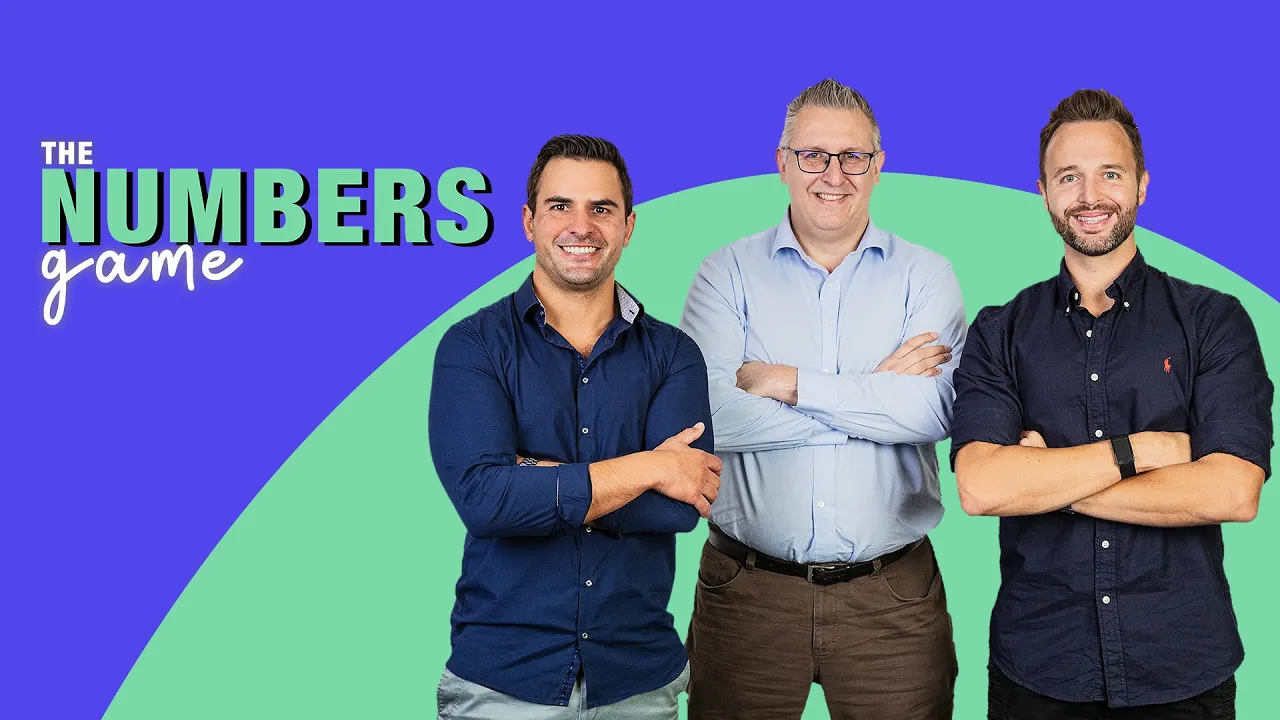
Welcome to episode 79 of The Numbers Game. On today's show we chat about the rise of cyber attacks in Australia and the ways to protect your business.
We'd love to hear from you. You can leave up to a 90 second voice note for us to play on the show: a question, some feedback, or a topic you want covered.
Episode transcript+
Jason · 00:00Welcome to episode 79 of The Numbers Game. I'm Jason and I'm here with Nick and Marty. Fellas, how are we? Tell me some good news.
Marty · 00:08Well, you know, it's coming up to Christmas in another, you know, probably a month from now. So that's good news. That's a good feeling. I'm up and about, feeling good. Nick, how are you feeling?
Nick · 00:18Oh mate, I'm feeling good. Good news. We're nearly through this session, which means you don't have to sit in that chair you're sitting in much longer, Jase. So I guess that's a positive. Every minute that we talk is a minute less that you've got to sit in that podcast studio. Let's be honest, you're not happy with it. You've done nothing but whinge about it for the last 15 minutes.
Nick · 00:35You were 15 minutes late because you couldn't get all the tech sorted. You're definitely the most tech-savvy guy on this podcast apart from our producer Tommy.
Marty · 00:45Yeah.
Nick · 00:45So good news is we're nearly there, mate. We're nearly there.
Marty · 00:49Okay. You know when a chair's only got 3 legs, it's, it's, it's a problem, mate. It's a problem. You should have sorted that. 3 legs, that's not a chair.
Nick · 00:58You've done well to balance on it.
Jason · 01:00Sensational. George Street Commons, the boys have recommended that I send you a letter. Apparently, I'm a bit annoyed with your podcast studio. I will send feedback. There is a feedback box right outside the door, so I'm going to slot the old pen and paper note in there. And look, this is how businesses get better, with a bit of feedback.
Jason · 01:17And likewise, I mean, I delete all of the emails that we get giving us feedback on how to make the podcast better. We're just going to keep rolling with the same the same format, the same stuff that we're always doing. And look, we're having fun and that's what's important. And if my back holds up for another half an hour, well, happy days.
Jason · 01:34So guys, recently we've had a chat about the Medibank hack and the Optus hack. And this is continuing to come up over and over again in the news. It almost seems like every day you log in, log into the news and you see something new about somebody else getting their identity stolen or, you know, their medical records have been accessed and, you know, things are going on.
Jason · 01:57And Nick, you've come to the party today to fill us in on some ways that we can protect ourselves. So I might throw it over to you, mate.
Nick · 02:04Yeah, thanks, mate. And look, I hope this episode isn't a boring one because this could be information that people already hold and they know all this stuff. But being in the industry that we are in, we do hold a lot of information on clients. So it's very important for us to be across this and not just for us to be across it as a business, but to help our clients as far as educating them on what they can do, just the little things.
Nick · 02:30And I think we've all been guilty of knowing what we should do but then not doing it because it takes a little bit of time to set things up at the start. But it's definitely, uh, worth doing. And, you know, we haven't been reminded of that, um, for some time until recently, you know, as you said, Medibank Optus and whatnot.
Marty · 02:52So, Nick, you, you, what do you— I mean, this, this is not boring. I grew up in Cambridgewake Camberfield out in the northwest of Melbourne. And, you know, the crime rate was pretty high back then in the '70s and '80s. And, you know, we'd put bars on the windows and locks on the doors and security shutters and cameras because that's what the environment demanded.
Marty · 03:15So when you say boring, if it's, you know, if it's your own home, you certainly take the right precautions to make sure you're safe. Now, I moved out of there too. I needed to. But We want to do the right thing for our business. So that's a really nice way to align it because we do it personally.
Marty · 03:33So we've got to start looking at parameters to keep ourselves safe personally, digitally as well. So I'm excited about this.
Nick · 03:40Yeah. And there's just, there's a few little things that you can do as an individual. You know, the one thing that you can't do is you cannot stop Medibank Private being hacked, you know. So we do have a limited control and You know, I'm not, I'm not defending Medibank, but I actually do feel sorry for them because I have absolutely no doubt that they were doing most things that they could have.
Nick · 04:02But these hackers are just so far advanced and they're spending so much. Now, this is their one job, to, to crack a system. So I think as individuals, there's a few things that we can do to make sure, you know, you're protected. And I think it's just worth sharing it in case, you know, if someone takes one piece of gold out of this, then, then that's fine.
Nick · 04:21So I might just go through some of the things that I think that you can do and maybe just pass to you guys to comment, because these are some of the stuff that we're advising our clients. Um, but the big push at the moment is, is I— is identity. So people, people are having things like driver's license numbers stolen, um, address— addresses stolen, phone numbers stolen, stuff like this, which is, you know, what they get from groups like Optus and Medibank.
Nick · 04:49The most common, the most common, I guess, fraudulent activity you're seeing at the moment is accounts or credit being created in someone's name. We had one of our staff who was unlucky enough to have his details stolen a few weeks ago.
Nick · 05:09He's still not sure how it happened. Wasn't Medibank or with Optus, but whoever stole his details set up a Commonwealth Bank account in his name. He was an existing Commonwealth Bank client. They set up a Commonwealth Bank account in his name.
Nick · 05:25They transferred money from his account that was existing into the new account that they'd set up, and then transferred the money in that account off to crypto, off to Bitcoin, and gone. And it was about $40,000, $45,000, $47,000, I think.
Nick · 05:40He's still waiting on the Commonwealth Bank to come back to him on that, um, but didn't even know. Someone's got his details, managed to set up an account, siphon the money out. So this is what's happening at the moment, which is why they want the little things like your driver's license.
Nick · 05:57So there's a few little things that you can do. The one that I think is going to have the highest impact, and not many people know this, but you can actually sign up to a credit reporting agency. One of the big ones is Equifax, and you can switch on notifications as to when credit is being applied for in your name.
Nick · 06:19So a common thing that happens, as I mentioned, the guy at work had an account set up. The other common thing that happens is people apply for a credit card, or the hackers apply for a credit card in your name, or they apply for some sort of debt facility somewhere in your name, set that debt facility up, take the money out, and, and gone.
Nick · 06:39So with a company like Equifax, if you just Google Equifax, it will come up, E-Q-U-I-F-A-X. You can set up an account with them, and anytime credit is applied for in your name, you will get a notification, and you'll have to— and you can actually either block credit being applied for unless you approve it, or just get the notification, I think is how it works.
Nick · 07:01If you're an Optus or Medibank client, they're off— they're actually offering free Equifax accounts to certain clients to help combat what has happened. So that to me is one of the most well, impactful things that you can do.
Nick · 07:17Someone cannot open a credit file in your name, simple, with your identity details. So you pretty much squash that issue happening. You have to actually go into Equifax yourself and approve it. And a lot of people don't know about that. They don't know about Equifax. Equifax is the same company we go to as mortgage brokers to understand people's credit history.
Nick · 07:36So every time you apply for a facility, it is listed there. Every time you're late on a repayment or there's a default, it is listed there. So Equifax can let you know. So that's a really good way to stop debt being created in your own name. Even if they do have your details, they can't do it.
Jason · 07:53Yeah, it's smart and simple. And I guess with the volume of what's going on in the market at the moment and the fact that even with Optus, that nearly 10 million people's identities and names, addresses, tax file numbers, dates of birth, all these things that makes it simple enough to set up some accounts or apply for loans in your name.
Jason · 08:12It's a lot of people that are at risk. So something like setting up some ID protection through Equifax, I mean, it's, it's just a no-brainer really. Well shared, Nick. I love it.
Marty · 08:22It's brilliant advice. And as you know, I'm with AHM as well, so I'm a part of that Medibank thing and I'm with Equifax. And it is brilliant because the scammers are getting much more clever in regards to even when they're looking to set up accounts in your name, they're bringing up your details and getting you to confirm it.
Marty · 08:43So it's like if they want to set up an account, or even with tollways as well, they're trying to find unique ways to get your data and confirmation on a couple of additional pieces of information to do what they want to do. So you've got to be high on high alert for any texts that you're getting and any phone calls that you're getting, uh, wanting to confirm your data.
Marty · 09:05Just double, triple check. But Equifax is great because you're all— you'll just get that automatic response if something happens on your credit file. I think everyone should have that. It's, uh, it's not costly to set up, uh, but yeah, I think in this day and age it's a brilliant piece of advice, Nick.
Nick · 09:24And another common thing we're seeing at the moment is people hacking email systems. So, you know, Chase, hypothetically, a hacker gets into your email, um, understands what is going on in your life.
Nick · 09:39Um, so the example I'm going to use is purchase you're purchasing a property. And this is something that we've seen, we hear about a lot and we've seen in our business because we deal with people that buy properties. So let me give you an example.
Nick · 09:55Jayce, you're buying a property. You have come to us for a finance approval. You need to pay a deposit on that property. The property is, I'm just gonna pick an easy number, is $1 million. I've got a real life example here, which is scary stuff.
Nick · 10:10Wasn't one of our clients, but it was, A friend of mine who's a financial planner, it was his client. The property price is $1 million. You need to pay a deposit on that property of 10%. What's happening a lot at the moment is someone gets into your emails, goes through, understands you've bought the property.
Nick · 10:29You've got emails back and forth to a broker, to a solicitor, to a financial planner, whoever it is. They see an email from the solicitor to you, so they know who you are dealing with from a conveyancing point of view. And the hackers also understand what the process looks like.
Nick · 10:45For you to pay 10%, you have to send it to a trust account. They will often mimic or pretend and have emails that look very similar. There might be one letter changed that might look like your conveyancer's email. So you get an email from your conveyancer, "Jase, I've seen your loan's approved," because they've logged, they can see your emails.
Nick · 11:04They see the broker email said, "Congratulations, Jase, your loan's approved." 'Uh, it's now time to pay your 10%. Uh, here are the trust account details to pay your 10%.' You see, you know, instead of, um, johnsmith@conveyancing.com, it's johnsmith1@conveyancing.com.
Nick · 11:21So you don't even pick it up, right? So you then go and transfer that 10% to a trust account that never existed or was an account of a hacker. The, the story that I've got is, um, a lady who was quite elderly.
Nick · 11:37So it's actually a really sad story. Someone did exactly that to her. She was paying cash for a property and it was just over $900,000. So for the settlement, her emails were hacked and someone mimicked the solicitor, gave her trust account details that were incorrect.
Nick · 11:55The settlement money, which was actually 90% of the property price because she'd already paid the 10%, it was a balance of the $900,000. So it's about $800,000, went to a scammer's account, money gone. Now the issue there is you've got no defense there unless you, unless you catch it before it's siphoned out.
Nick · 12:18You've got no defense. Where you do have offense is— oh, sorry, defense— if your credit card is stolen or something like that, the banks will generally rebate that. If you're scammed The bank won't rebate that because you've willingly transferred money. It had nothing to do with the banks.
Nick · 12:35It had nothing to do with your identity being stolen. Maybe the security on your emails wasn't correct. Maybe you didn't educate yourself on what to look out for. This stuff is happening all the time. Banks get— another example, when you have a construction loan and you have construction drawdowns, you know, there might be an invoice for the slab stage, which is $30,000.
Nick · 12:58Those invoices get intercepted by hackers, and hackers change the builder details, the builder bank details on the invoices. Now, banks have systems, and we have systems that pick that up, but this is the stuff that we see.
Nick · 13:13So you need to be— well, firstly, understand what the security is like on your emails. The easiest way to fix this is to go old school and do not make transfers without picking the phone up. So, and a lot of conveyancers, because they're dealing with big lump sums of money, and real estate agents, we deal with a lot of real estate agents, they're doing the same at the moment.
Nick · 13:37They will say to the client, "Do not transfer until you've called us," or, "Do not transfer your deposit money unless you get a call from us, and over the phone, we can confirm the account details for you." So that can be any amount of money that is significant to you.
Nick · 13:54You know, if it's $300, $600. If someone's paying your invoice, Jase, they can call you, they can call your receptionist or your admin team, double-check the account details, check that it's the same as last time, the last invoice they paid to you.
Nick · 14:11Don't— and what happens is, and this is what generally is the case here, people are on their feet, everyone's busy, they're checking emails, they're stressed because there's a purchase happening, and they just transfer things quickly without thinking. Double-check the account number is the same as you've used in the past.
Nick · 14:27And if it's a big lump sum of money, call the party that you're transferring it to, double-check they sent the email, it's the right amount, and it's the right account details. Because that is a scam, and that money is not— you can't get that money back from the bank.
Nick · 14:42And today it goes quicker than it used to. So you used to have a couple of days to try and intercept it. Now with the— they've sped the banking up so money can go in and out straight away. It could go to crypto straight away and then it's banished, it's gone.
Nick · 14:59So that's another really, you know, easy tip. Back to old school, pick the phone up, double-check account details.
Marty · 15:07Great points. And when you do ring and confirm, you can set up ASBN account numbers in your payees on your internet banking as well. So if you have, you know, consistent payments that you need to make, you can even check in with your own data. And again, you can get some comfort with that.
Marty · 15:25But if there are any particular changes to one of your existing, you know, people that you're paying, you can make sure you double-check that at all times. Because like Nick said, this is happening everywhere and we have to protect ourselves because you just can't imagine how that woman would feel.
Marty · 15:43It's heartbreaking. Been working all her life, to make that purchase and you just go, it just decimates people. So you have, but you have to take the steps yourself. You have to take responsibility. I know corporates are doing everything they can as well to educate clients, but it's really important that you take responsibility for it.
Nick · 16:05The next one is passwords. And I think for a lot of our listeners, this will be second nature and they would have heard about this, but I know for a fact, even me included at times, people don't take action here, but your passwords need to be protected in a way that they're, they're a phrase and there's something that's very hard to, um, very hard to guess, or they're protected through a system.
Nick · 16:32There's a password protector like LastPass is one that we use in our business. So a very easy one, if you don't want to go down the LastPass path, highly recommend you change all of your passwords to a phrase that's easy enough for you to remember that no one else would know.
Nick · 16:54Because when you're using birth dates, when you're using kids' names, all this stuff's really common, right? And what you don't understand, or what people don't understand, these hackers have systems. They don't sit there and try and guess your password. They've got software platforms that they work your password out.
Nick · 17:12So I'll give you an example. Jase, you're, uh, you're in Sydney today in a podcast studio that you're not happy with. So, you know, yes, make sure you don't change your password to this. But, um, your pass— so today's the 15th of the 11th, 2022.
Nick · 17:29Your password could be 1511. I'm not happy at the Commons— at the Commons podcast studio. Now, who— no one will guess that, right? No, unless they listen to this episode and you change it.
Nick · 17:45So 1511, 15th of November, it's got nothing to do with, um, you know, you could go 1511 2022, um, not happy with the Commons, you know, podcast studio, or geez, I wish— geez, I wish I wasn't in Sydney doing, doing TNG today.
Nick · 18:04'Now you might think that sounds stupid, but no one's going to guess that.' Um, so these are the things, you know, um, pets' names, you know, um, 'My cat Jinx jumped over the— jumped over the balcony 151122,' you know.
Nick · 18:23So these are the things that we need to think about. Um, with the— if you want to go a step further, you can use a system like LastPass. So what LastPass does is it holds all of your passwords in one system. You only got one password to remember.
Nick · 18:40Now, to a lot of people that might sound risky because they might say, well, I've only got one password, someone will think about that. But you make that password absolutely impossible for anyone to get, such as a really long phrase. And what LastPass will do, it will— you can have passwords in there, you know how you get those auto-generated passwords and you go shit, I can't use that password because there's about 6 exclamation marks in there, asterisks, hyphens, you know.
Nick · 19:08But you can actually have that as your password, so it's never going to get guessed. The only password you need to remember is that really long phrase, which is going to be personal to you, which no one will ever guess. So one of the things that, you know, we have companies that look after us from an IT and a crypto point of view, a cyber point of view, as we've spoke about.
Nick · 19:29But it's all about the phrase. Make sure your passwords are phrases and don't have the same, uh, if you haven't gone down the LastPass path, don't have the same phrase for every single password because then they guess one, they guess them all. So, and it's actually, I find it's actually easier to remember the phrases as an individual because I'm like, how the hell did I come up with that?
Nick · 19:52But I'll never forget it because it's something that's specific to me., and I think about it really easily because it's related to something that I see every day, but it's got nothing to do with my name, my date of birth, or anything like that, my address. And these are the common things you see: your kid's name and their date of birth, you know, John Smith, 15/11/22, which is the birth date.
Nick · 20:14It's just really easy to guess these things. So simple but easy change.
Jason · 20:20Yeah, well, Nick, I don't know if you're an iPhone— oh, you are an iPhone user, and, uh, I just noticed recently, I was sitting on the couch the other night and I wanted to change my password for something on my phone. Um, and iPhone password tool obviously does this similar to LastPass. It'll generate you a, you know, sqd@!
Jason · 20:36and obviously then pre— every time you go to do it, you can use your face to unlock your phone and punches in the password for you. Now I logged into that for the first time for ages the other day and didn't realize it's now doing security recommendations.. And to my shock, I found out that 28 of my passwords have been picked up.
Jason · 20:57And these are just, you know, things like Twitter and footy tips and, you know, just silly stuff from years ago. Um, but they've been— it says here that you have an alert that these passwords appear in known data leaks. So somehow my username and password is somewhere out there on the bloody interweb.
Jason · 21:15And, you know, bloody Elon Musk could have somebody on my Twitter account pretending to be me, and they're genuinely logged into my account. There's an Instagram one, Mitchelton, PayPal. It's pretty concerning that, you know, now— I mean, shit, before this episode airs, I'm gonna go and change all these passwords.
Jason · 21:31But, you know, I think if you are an iPhone user and you haven't logged into that password section of your phone, I'd highly recommend jump in and have a look. It might surprise you. It then goes on to give you recommendations because obviously if you store your passwords in there, it knows your passwords. It's given me recommendations that there's about another 15 things that have a duplicate, duplicated password.
Jason · 21:52So I used to use the same part, like years and years ago, used to use the same password for things. And then now I went to kind of similar to what you said, Nick. I've got a phrase, and then I put something in the middle that relates to something like, you know, what I'm logging into, and then a combination of numbers.
Jason · 22:07And it would be impossible for anyone to know except for me. And then even sometimes I go to log into one, I go, shit, what were the numbers that came after the, the Facebook password. No, you know, somebody— I can't do a password reset a week, mate.
Nick · 22:20The same thing happens to me. I reset my password. Like, that's better than getting hacked, right? Having to reset your password for something you haven't been into for 100%.
Jason · 22:27And the other, the other tip there as well, um, just off the back of the iPhone thing and hearing you talk about LastPass, is if you haven't turned on two-factor authentication, you know, that thing on your phone that generates a unique 6-digit code every bloody 10 or 30 seconds, um, LastPass has that too.
Jason · 22:44So you might think it's scary to need only one password and and somebody's got access to all of your passwords, but unless they've got your face or your two-factor authentication off your phone, they can't get into your password system. We use Password Protect, which is a big one in the accounting industry and a lot of professional services.
Jason · 23:02And likewise, every single team member has to have their phone next to them and punch in that 6-digit code to then be able to click toggles to get into the other 20 bits of tech that they need to use per day. On just throwing in there at the end here as well, Nick, Another one from a scammer point of view to keep— to look out for, and this is probably more of a message to accountants out there through what I'm doing with the CPA and even Xero, but the ATO are actually looking to go to a system where,
Jason · 23:32let's say, Nick, you wanted to change accountants. Whoever you go to can just go, okay, cool, Nick, tell me your name and your tax file number and your date of birth, and they'll punch it into their system and they can pull your details into their tax agent portal. And let's say they wanted to amend your tax return to help you get a big refund.
Jason · 23:52They can tap some buttons and amend it to get a big refund. The problem is not a lot of people are doing identification checks. Nobody's verifying your identity. So somebody could have walked into an accounting firm, said, "Hi, I'm Nick Riley, have your tax file number and your date of birth," and they look like a trustworthy person.
Jason · 24:10So they punch it in and then they go, "Oh, actually, here's a receipt that I forgot to claim on last year's tax return. Do you mind putting through an amendment for me?" 'Oh, and I've also updated my BASB and account number,' and all of a sudden that refund is going somewhere else. That person disappears into the sunset, and it might be something as small as an individual tax return, but even some business owners are being replicated, and they're going to other accounting firms pretending to be a business owner with their ABN tax file number and business identity, and
Jason · 24:40then organising large GST refunds or big changes to tax returns. So, word of warning out there off the back of all of the you know, be careful with your identity thing is verify people's identities too. If you're in a business where you're dealing with people, gone are the days where you can just trust that somebody says they are who they are.
Jason · 24:58And I'm pretty sure the government's going to make mandatory identification verification checks as well for industries like ours.
Marty · 25:06Yeah, well, some brilliant, brilliant, brilliant advice there. Yeah, again, take responsibility. This is a really This is as important as making money is protecting money. In the fact we use it in life and we need it, it's a really important thing to focus on.
Marty · 25:23So yeah, I think it's great.
Nick · 25:26And thanks for bringing the 2FA, the two-factor authentication stuff up, Jase, because I was going to bring that up. But even if you don't have a platform like Authy, who's one of the 2FA systems, you can actually just do it with text.
Nick · 25:42So it's not as, it's not as good, but you know, if you're thinking, geez, I don't want to set an app up on my phone, just make sure with your bank— it's very easy now, you log online and you can do it— you said you set it up with a text message. So for depending on the bank, um, I might have a text message, or the bank apps will actually have another system where you've got to approve it on your app.
Nick · 26:04But you can just, you can do it as simple as a text message. So every time you go to make a transfer you'll get a text message with a code that you have to, um, that you have to input. Two-factor authentication is an absolute must for any bank account or anything significant where you're making changes.
Nick · 26:20Um, the other example I wanted to give, because this actually nearly got me, and this was about a month and a half ago, and this is different to banking, this is different to all of that stuff. Um, so, you know, so I just want to share this so people look out for it. So there's a lot of calls from the ATO and all that sort of stuff.
Nick · 26:37I think people are used to that. I had a call about a month and a half ago from someone who said they were from eBay, um, who said there'd been a suspicious transaction on my PayPal account. So someone was using, um, my, uh, was trying to purchase something on eBay and trying to pay for that via my PayPal account.
Nick · 26:59And it was a legitimate call to me. It sounded very legitimate. So I went, okay, well, shit, thanks for letting me know. She said, "Look, there's just a few things we need to do. Can you—" She actually had the purchase. She said, "Can you confirm this purchase at this time in this place?" Which is very common to what you get from the banks.
Nick · 27:21And I said, "No, I can't confirm that. That definitely wasn't me." She said, "Okay, I'm just going to transfer you to someone and we'll shut things down." Anyway, she transferred me to this guy. Once she transferred me to this guy and he started talking, I worked it out straight away. Um, but he basically wanted me to jump on my phone and get him— but what he was trying to do was get my IP address on my phone, basically.
Nick · 27:44So he said, look, there's a few— have you got a— he said, have you got the eBay app on your phone? I said yes. He goes, that's where the issue is. He said, open your phone up, go to settings, and let me know this. And I just went, mate, I just hung up. I knew straight away what he was trying to do. But she had me because she, she said checking, this was you.
Nick · 28:00Well, it wasn't. Okay, well, I'm going to transfer you to someone. We need to get that fixed. Now, I consider myself reasonably savvy, um, given what, you know, I'm— I experience with work and, and these conversations and whatnot. You know, I'm not, I'm not siloing older people, but someone older might have thought, oh wow, I need to hurry up and stop this, and jumped on and given their IP address on their phone.
Nick · 28:23So it just— little things. I think if we share this stuff, if someone hears that, they'll think 'Jeez, that's what they're talking about on the podcast. I need to look out for that.' Never give anyone anything on your phone, um, that you don't know, that's not a friend or whatnot. So first time I had something like that, and had me for the first 3 or 4 minutes.
Marty · 28:43Yeah, and just be careful too with the Medibank thing in regards to a lot of, uh, doctors will still charge your fee when they, uh, when you go even with private health insurance, and they're targeting that as well. So people are getting calls I've heard of a couple of clients in that situation.
Marty · 29:00Hasn't happened to me yet, fortunately, but they're getting calls in regards to putting funds across in order to confirm their surgery dates. And there, yeah, so that's again, be very, very savvy. Ring the practice directly, making sure you do your checks and make sure you're safe.
Nick · 29:21And just one last tip before we finish up, just on that one I was talking about with the eBay lady that called me. If you're not sure, you just simply hang up and redial the number that come up. It's generally not a private number. It's generally a landline or a mobile. So if you're not sure, hang the phone up, redial that number, and you'll soon work out if they're from eBay or if they're from the ATO or they're from a bank.
Nick · 29:43Again, a couple of really little things, really easy things you can do that'll squash the problem. So that's about it. Bit of doom and gloom, but— 100%. —another day. Well, it is.
Jason · 29:53But look, I think I feel like I've got some actionable steps out of this episode, Nick., and I thank you very much for sharing. It's wise words as always. I'm gonna jump onto my passwords on the iPhone, fix up the 28 passwords that are out there on the dark web. And look, I think for the listeners out there, again, actionable steps.
Jason · 30:12Go back through this episode. I think the other message at the end there, Nick, where you said, you know, we're not targeting the elderly, but have these conversations with your parents too. Because, you know, I know my dad, for example, has, has had that similar phone call, Nick, that you got. Sounded very believable but went a couple of steps too far before we realized it was too late.
Jason · 30:31So it's— it can happen to anyone. Um, so spread the word, have the conversation. If you think this episode can help someone to, uh, sort out their security, make sure you share it and tell them to give it a listen. Thanks again for listening to episode 79 of The Numbers Game, and until next time, game over, lads.
 Getting To Know Nick Reilly
8 November 2021EP 31
Personality Profiling and Strategic Planning - 1 Percenters
4 August 2022EP 58
 2024 Predictions
21 December 2023EP 150
 Rising Rates & Market Shifts: Australia's Economic Crossroads
23 November 2023EP 142
Discovering The Potential Of AI
7 February 2023EP 86
 If I Could Start My Business Again Today...
16 September 2024EP 203