Rising Rates & Market Shifts
Australia's Economic Crossroads
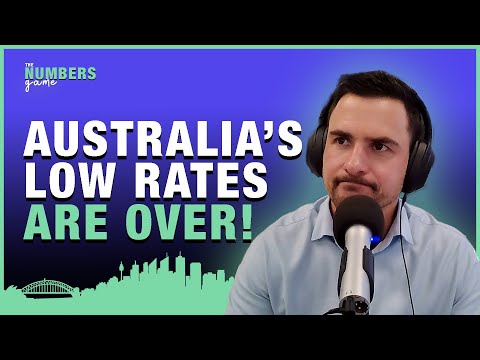
Welcome to Episode 142 of The Numbers Game. In this episode, we tackle Australia's pressing economic issues: rising interest rates, inflation, and their impacts on individuals and businesses. We examine the challenges in the housing market, the effects of migration and wealth transfer, and the importance of strategic planning in these uncertain economic times.
We'd love to hear from you. You can leave up to a 90 second voice note for us to play on the show: a question, some feedback, or a topic you want covered.
Jump straight to the part you need.
Real questions this episode answers. Tap one to hear the answer.
Episode transcript+
Jason · 00:00Welcome to episode 142 of The Numbers Game. I'm Jase, and I'm here with Nick and Marty. How you going today, fellas? Marty?
Marty · 00:07Going well, Jase. Going out. I was down at the Wanturna Trash and Treasure Market on the weekend buying Charlie's Christmas presents, just with the economy going how it's going. But he's into flipping, so he's trying to find these $5 Nike shoes that are a little bit worn and cleans them up and he could sell them for $50.
Marty · 00:27So I had to trance around for about 2 hours. But yeah, geez, it was a lot of stalls and a lot of people, and a lot of people buying stuff on the cheap. Yeah, it was quite an experience. Nick, how are you, my friend? Hopefully you did something more interesting than me.
Nick · 00:44Oh, well, look, at the time of our recording, it's come off the back of a busy Spring Carnival, Marty. So as always, fantastic time in Melbourne, possibly the best week in Melbourne, maybe outside of Grand Final week. A very disjointed week at work.
Nick · 00:59So yeah, just gearing up for a 5-day week. Haven't done that for quite some time. So licking wounds a little bit today, but not as much of our— as our good friend in the middle. But I'm sure I'll push through. But yeah, looking forward to today's episode and some more wisdom from you two gents.
Nick · 01:19Jase, how are you, mate?
Jason · 01:22Good, mate. Good. I love that you said that you had a full week, but I'm pretty sure you might be at a golf day on Thursday playing golf for the entire day. So I'm not too sure about a whole 5-day week for you.
Nick · 01:32Yeah, correct. But it's our golf day, so there's a lot of, uh, there's a lot of prep, a lot of organization. I'll be making sure things are all, you know, going smoothly on the day. Um, golf's just a small part of it.
Jason · 01:44No, no, very good. Fair enough. No, and, um, yeah, look, likewise, I was not at a Trash and Treasure, but I'm interested, Marty. I'm gonna have to give it a go one day. Uh, likewise, like you, Nick, Stokes Day, Stakes Day, Spring Racing Carnival, sun's out around Melbourne, there's plenty going on. I think there was the Ironman on the weekend too, if for anyone who was out there watching people do crazy runs and bikes and everything else.
Jason · 02:04So it's just, um, and then yeah, coming into Christmas time, I mean, we're only a few weeks and, uh, Santa's going to be doing his thing. So I wanted to talk a little bit about, uh, the economy and the fundamentals and what the Reserve Bank's doing and other, other rate rises. But before we get in today's episode We just want to say once again, thank you to Dashboard Insights for becoming The Numbers Game's sponsor for this season.
Jason · 02:27If you haven't heard about Dashboard Insights, I recommend you go and check it out. Basically turns your business's data into interactive dashboards that gives you a visual representation about your business performance, helps to empower and drive confidence and ability in your decision makers in your business.
Jason · 02:43And it can be fully customized to give you access to the data that you need when you need it. So if you haven't checked it out, dashboardinsights.com, you can get free demos. And I recommend you talk to our great man, Ryan, who will be coming on to one of our future episodes to chat about all things business in Ryan's world.
Jason · 03:01You know, as a guy who runs an accounting firm, has an offshoring business for employees and has Dashboard Insights, that'll be a great discussion that we'll have in some upcoming episodes.
Marty · 03:11Well, you've been on multiple holidays, Jay, since you've implemented Dashboard. So I think, Every business owner wants to optimize. So a lot of benefits, a lot of benefits. So we're excited to have them on board.
Jason · 03:23Beautiful, Marty. You're right. I did sit on the beach and load up one of the dashboards and just sat there refreshing. And then I was annoying Greg texting him saying, well, what's going on here? Why is that happening? So now getting into today's episode though, I'm excited that we're another step closer to that 150, ready to raise the bat again.
Jason · 03:40And as always, I go early because I wanted to talk about the Reserve Bank of Australia. There's huge heat at the moment in the media. And that's off the back of, I believe it was the 13th rate rise at the start of November. And just, you know, in what we do, you know, you guys, financial planning, mortgage broking, commercial deals for business, and then what I'm doing day in, day out, working with small business owners and individuals from a tax side, we get quite a lot of exposure to what's actually happening in
Jason · 04:10the real world. And unfortunately, it seems like the lag or delay effect that the Reserve Bank is working with when it comes to interest rate rises isn't really having the effect that they wanted it to have when it comes to curbing inflation. So starting with the basics, I'll talk you guys through a few points and then I want to get your lovely brains and thoughts on what's going on.
Jason · 04:31But basically Reserve Bank of Australia, which is our central bank, they adjust interest rates to keep inflation in check. Now, this has happened since the dawn of time. Whenever there's been inflation getting out of control, the bank raises interest rates. And basically what happens is it means that money becomes more expensive to borrow.
Jason · 04:49And theoretically what it means is it should slow down spending and stop investment from happening as much. When there's lower investment and lower spending in our economy, inflation goes back down the other way. Unfortunately, I think things are probably a little bit more complicated in this day and age than they might have been 50 years ago when that was a simple tool that would stop inflation from happening.
Jason · 05:10First off the get-go though, guys, from an inflation and rising interest rates point of view, what's been your high-level take on how it's affecting people in your world?
Marty · 05:21Yeah, I think people are genuinely concerned. I know we're working off historical numbers, but no one can get a read on what's going to happen, you know, in 2024. And I think people, I'm starting to hear things in the trenches like, you know, people are selling up their investment properties because interest has gone up and also land tax has gone up and just general concern around cost of living.
Marty · 05:45So you're starting to see people offload some assets in order just to solidify their position. And also in businesses, it has an impact as well because everything is more expensive in regards to interest being paid on loans. But just in general, costs are up across the board, cost of living expenses in general.
Marty · 06:05And I think we're starting to see the impact of that, whether that's not showing up on the scoreboard just yet with inflation. But again, you got migrants coming in with a lot of money that's fueling the need for housing and they're spending money in the economy.
Marty · 06:23And it just feels like something's not right. It's really hard to get a read on what's happening. And that's the general feeling I'm getting with customers on the ground is confusion. And what should I do? And I've said it in previous podcasts, you need to do what you need to do given where you're at.
Marty · 06:40Don't buy into a story that rates are going to come down in 6, 9 months and get yourself into trouble. You need to act given the circumstances that present to you. But certainly more concern in the general market than what I've heard before.
Marty · 06:56So yeah, what about yourself, Nick?
Nick · 06:59Yeah, I agree with you. Concern and confusion. And I think where We're finally starting to see people get ready for more difficult times. So to Marty's point, the selling of investment properties will, you know, people that are carrying home mortgages as well, feeling the impact on their home debt as well as investment properties, think, well, I've got to bunker down and protect the home.
Nick · 07:24So people are making those moves. People starting to cut costs in areas finally. I think one of the concerns that we've got is unemployment. And you know, what's been getting us through is savings and a low unemployment rate.
Nick · 07:41But migration's opened up, so you've got more people coming in to do work. To Marty's point, businesses are now starting to look at their cost base. So business people who are smart are thinking, you know what, it could be a difficult 12, 18 months.
Nick · 07:57What do I need to do to protect the business? Okay, maybe I need to reduce my employment costs. So it's the unemployment rate that worries me. Where's that going to go? And on the flip side, I guess you see some people that are doing really well, and that's the people that aren't exposed to interest rates from a debt point of view, but, you know, have exposure from an asset point of view.
Nick · 08:21So, you know, all of a sudden now you're getting good return on your deposits, you're getting good return on fixed income. So you're just seeing a real gap between, I guess, the older population that have got money behind them and are retiring in comparison to the younger people, you know, who are putting kids through school, you know, have debts that keep going up and up and up, as well as just general living costs.
Nick · 08:47So yeah, it's real interesting at the moment, and there's just so many factors that that are making it hard to get a read on exactly what is happening out there at the moment.
Marty · 08:57You would usually see if rates do go up and cost of living does go up, usually it has some impact on property prices as well and assets in general. So you usually see some sort of shift to the downside because everything realigns. But that's not happening because of— I'm putting it down to the migration rates, but that's not happening.
Marty · 09:18And rents continue to go up because people need somewhere to live. So it's like, it's a unique cycle that I don't think would be operating in its usual economic cycle. And that's, I think, where the confusion lies. 'Cause if things readjust and prices come down slightly, you know, it gets back into an affordability pattern where people can borrow on their incomes a certain amount, then the world turns.
Marty · 09:43But yeah, at the moment, it all seems a bit labored. Just based on what's going on.
Jason · 09:50Great points you both make. And I think one of the reasons that inflation has really struggled to be affected or come back down with all of these rate rises so far, there's a few factors, but one of the main ones is we've never had more baby boomers getting to retirement age and living the retired life than we've ever had before than this moment in time.
Jason · 10:10The other thing is that superannuation you know, is finally kind of getting to that point where there's a huge amount of money under management in superannuation. But now we're getting to a point where more and more people are beginning to access their superannuation and retirement savings more than ever before.
Jason · 10:26So there's actually a whole bunch of household income that's being drawn down out of super funds, which means that asset-rich, you know, retirees and people with, with money in the bank or money in super are earning more than ever on the higher interest rates because they've got money in the bank.
Jason · 10:44It's sitting in cash. They're getting higher interest earnings, which then gives them more disposable income to live their retired lives with. It means that, you know, boosting their income, they're spending money. So they're not sitting back being affected by interest rate rises in a negative way.
Jason · 10:59If anything, they're being positively affected by the interest rate rises, which means, yeah, their savings and deposits are going up and they've got more income to spend. So that's probably driving inflation more than what it has in the past.
Nick · 11:12Yeah, just to put some perspective on that, Jase, I think the thing that we saw this morning was so far this year, $100 billion has been drawn down from super, super accounts or pension accounts to people that own those accounts. And that money is obviously going into the economy.
Nick · 11:29So $100 billion of income that's come out of super. So think about that. And I saw, we're obviously in the financial planning game, so I saw something this morning. I won't mention where it was from, but it was a mortgage-backed product, which basically provides a fixed income stream for a certain time at 6.75%.
Nick · 11:48So it means you could put your money, whether it was with a super fund or not, with this group and lock in a 6.75% return. So if someone's got $1 million in cash, which is not crazy, you know, there's $67,500 in income by parking it in that account.
Nick · 12:13And that's what we're seeing happen at the moment.
Jason · 12:16Yeah, incredible. That's crazy. Marty, you touched on one of the ones as well was that the, you know, our rental affordability and then even the home prices, how that affects usually inflation. And when you get rising interest rates, sometimes you see property prices come back slightly. However, in the current market, we're not seeing that happen.
Jason · 12:34We're probably seeing a liquidation of a building company every day or every second day in Australia at the moment, which means there's less building companies out there to build homes for people that are trying to get into the market. It's harder than ever for someone to get a home loan at the moment to build a home unless they've got a considerable amount of savings and, you know, and they've put some really decent planning into being able to do it.
Jason · 12:56But when you've got the price of homes going up, the cost of labour going up and the cost of materials going up, and then less building companies out there there to actually build a home, that's going to affect the availability of homes out there for people to live in. So you're just continuing to see prices being driven up in rental game and home loan, home affordability.
Jason · 13:14You guys seeing a bit or hearing any effects of people that are struggling in that aspect?
Nick · 13:20Definitely. I think the other, the one thing you didn't mention there was the lack of margin available for developers at the moment. There's just no incentive to develop property at the moment. In the way it used to look 2 or 3 years ago.
Nick · 13:35So, you know, insane lack of buildings going up, whether that be, you know, house and land packages or apartment buildings, and more people coming in causing supply issues. And the other issue is the ability to get approved for a loan.
Nick · 13:53That's a big problem at the moment. With interest rates at sort of 6% now, if you're a homeowner, I think, Marty, you've gotta demonstrate that you can service that debt at 8.5% to 9%. So people actually don't have the ability to borrow anymore outside of deposit and whatnot. They can't get approved for the loans that they require.
Nick · 14:10So yeah, it's a fair concern.
Marty · 14:15Yeah, and I think what struck me with what you said, Nick, before in regards to all that money coming back into the market with the boomers, like you go back 2 years ago and they're getting they're getting maybe $15,000 to $20,000 on that million bucks that they're now getting $60,000 for, $67,000 for.
Marty · 14:35And people 2 years ago borrowed on a million bucks, $20,000 a year on interest, and now they're paying $60,000 to $65,000 interest. So you can see how that inflation figure's virtually neutralizing.
Marty · 14:50It's not coming back, because it's just, and then you put immigration on top of that with, like I read this morning, you know, Chinese foreign investors buying up Toorak mansions for $10 million. You know, it's like, yeah, pumping money into the economy.
Marty · 15:07And really the people that are suffering are, yeah, and it's no different to business. You know, businesses that are highly leveraged up are always vulnerable in these types of markets. But the ones that aren't generally live to tell the tale, right? So I'm just contextualizing that for everyday people.
Marty · 15:27If you've got young people that have leveraged up on average incomes are really suffering and you've got the other end of the spectrum where people are making more money on their money than ever before. So it really creates a divide. So, and I think maybe that's, it's been good talking about this because it's sort of, just given me some insight as to where the problem might be.
Marty · 15:50I think we just got to get a bit more of a level playing field and working out that potentially interest rates aren't that sole lever here and something needs to be done just to make it a fairer market across the board for everyone.
Jason · 16:04Yeah.
Nick · 16:05And the only other thing to mention too around the gap between those with money and those not is the The shift in wealth from generation to generation that's occurring at the moment, it's something spoken about a lot in our industry.
Nick · 16:20You know, you've got people that are in their, you know, 80s and 90s that have built up quite a lot of wealth because maybe they bought a house or two or three. All of a sudden you've got children getting inheritance of a mil or $1.5 million, and that's not crazy.
Nick · 16:38That's really just a family that managed to buy a few properties and maybe put some super away. So that's also creating that divide between, you know, maybe the haves and the have-nots. And if you get a million or $1.5 million in an inheritance, there's your property.
Nick · 16:56So all of a sudden, you're not exposed to interest rates. So you've got, you know, if they're a young couple that's just got a million dollars in inheritance, which isn't crazy at the moment, they might have no debt and two incomes. So that then drives inflation forward as well. So yeah, it's, it's, those are all the reasons it's hard to get a hold on it.
Jason · 17:17Yeah.
Marty · 17:17And it's all pockets, right? As well. Like even I've spoken to some friends that live in regional areas that had retail shops that were getting, you know, $600, $700 a week on that, on that type of investment. And now they've relooked at the leases and they're only getting $400 a week because they want people to stay in the businesses.
Marty · 17:39Otherwise they'll just pack up and go. So it's like now all of a sudden they've got that higher rental return on lower interest rates when they've purchased the investment. So now the interest rates have gone up and the rents have decreased.
Marty · 17:56Now that's very isolated to certain regional towns. But that's not even being talked about yet. So that places a whole different level of pressure on, and I'm not talking conglomerates, I'm talking everyday, you know, mums and dads that are looking to invest.
Marty · 18:12And then you see the banks coming out. We've talked about this before with record profits. You're seeing Woolworths come out with record profits and you just go, Jeez, there's something again, that fair playing field certainly isn't there at the moment.
Marty · 18:28So something needs to be done because otherwise it'll be that boiling frog effect and there'll be some real chaos going into next year if something's not done.
Jason · 18:38I wasn't sure if it was on this podcast that we discussed it or maybe offline, but was it something like 60% of all homes in Australia don't have a mortgage? They're owned outright? Might even be higher.
Marty · 18:48Yeah, I think it was around 30%. 30%. Don't have a mortgage and 30% are rentals and another 34% that have a mortgage. Yeah.
Jason · 18:59I'll clarify those stats for next time.
Nick · 19:01Yeah.
Jason · 19:01'Cause I found it really mind-blowing and interesting. But you know, and Marty, you touched on it as well. Like the reason for opening up this discussion and, you know, covering it with you guys was more of a broad, you know, my thought basically was that inflation is not the key or the answer to, or sorry, raising interest rates is not the key or the answer.
Jason · 19:21It's not the only lever that should be relied on because I just think times have changed and we're in a very different economy and country than what we were 40, 50 years ago. And seeing things pop up in the news like affordability or the available discretionary spend for families in Australia right now is at the lowest it's been since 1990.
Jason · 19:41So there are so many families and people out there right now doing it the toughest that it's been in over 30 years. And thinking about, you know, consumer behavior, which is one of the main things they look at, you know, my thoughts on why we haven't seen yet— I think it's coming.
Jason · 19:57I think there's a lag and a delay effect on, on what's happened so far. But all of these interest rate rises, I think the real pain's coming in the next couple of months where— I think we've touched on it before and you guys will be well aware of this, but there's something like 800,000 home loans that are currently still under a fixed rate.
Jason · 20:15And they are coming off, you know, basically between now and the end of the year, those 800,000 home loans will no longer be on the fixed 2% and they're going to revert back to your 5s and your 6%. And those families, there's another 800,000 homes with families in them that are going to have thousands of dollars less per month to spend.
Jason · 20:35Then in the early part of 2024, there's another bit, there's another half million I think that come off in the early part of 2024 as well. But effectively, it's $370 billion worth of mortgages that revert from fixed rate to variable rate.
Jason · 20:52And that, that is what I think the real pain is going to be felt, and we'll start to see those consumer behavior and trends in the Jan, Feb, March stages of next year. I think when they get that quarter's reporting in April or May next year, because it's so delayed and so lagged, that's when the RBA is going to go, okay, shit, the damage is done.
Jason · 21:12We've done what we needed to do. And it'll almost be too late. If anything, I think it'll almost be sending us into a recession rather than, you know, bringing inflation down in a safe, manageable way. Yeah.
Nick · 21:23And you couple that with the reduction in household savings, and household savings is really one of the big reasons that inflation hasn't had the impact because people gathered record savings through COVID. And now you can see that that is slowly diminishing.
Nick · 21:39So, you know, at some point in time it's going to come to a head where the savings have gone, the costs have gone up, not just living costs, but your interest rates have gone up, and then you've got a massive problem. So, but at the same time, why the RBA can't see this, I don't know.
Nick · 21:58It's difficult to understand. You'd love to be in a room and see what they really talk about because they would know all this stuff that we're talking about. They know that. Like, they're not that silly. They've got access to the same data we do and some. So yeah, it's baffling really.
Marty · 22:13Yeah. And the thing is, you're starting to hear people like whenever there's, you know, with the inflation increase and rates going up, you know, initially people just still spend. So, you know, businesses make money because services go up.
Marty · 22:29People just accept they have to pay it. Electricity goes up, they accept they have to pay it. But it's getting to the point where they're not accepting it anymore. And people are starting to make changes, whether it's health insurance, whether it's, you know, car insurance, all sorts of different areas. They're starting to make adjustments in their life to make sure they're okay.
Marty · 22:47And I think in some ways, even though I don't like the idea of the heavy migration, because I think that just fuels inflation further, it's probably the only thing that's kept Australians buoyant in not wanting to offload property and keeping the asset prices up on the homes.
Marty · 23:06Imagine if that wasn't happening, because if properties did start to come down, can you imagine the panic on top of the cost of living, the issues? So you go, so in some way it's, I think it's counterintuitive, but it's almost like, I think if it wasn't there, maybe prices would've come back and there would've been more activity in the market to sell.
Marty · 23:29So people, because they would have had to and they would have felt pretty poorly. So yeah, and this is the confusing thing. You're not quite sure of what's right. And I think when rates do start to come down, there'll still be a lag effect of the damage as well.
Marty · 23:45So I think as hard as it is to turn inflation from being at high levels to lower levels, it'll happen pretty quickly, I think, on the back end, but there'll still be, yeah, there'll still be a lot of hemorrhaging by the time we get to that point when rates come down. And that's why I always say, do what you can do now to make sure you're okay.
Jason · 24:04Yep, definitely. Well, yeah, and look, I think Nick, you touched on it earlier too with unemployment. Speaking from the accounting industry, I'm hearing kind of at the Big Four end, there's been a lot of layoffs in the consulting space that, you know, where the consulting revenue is the nice to have kind of thing rather than, you know, tax and compliance is what people they kind of have to do it.
Jason · 24:24Um, people are lowering what they're spending in consulting. You know, the governments aren't spending as much as well, um, in the consulting space. So then all of a sudden there's layoffs. So I definitely agree that unemployment heading into 2024 is going to be a real interesting space to watch, and that is predicted to kind of trend up through 2024 and into 2025.
Jason · 24:44Um, so that'll be interesting one to watch. And as well as, you know, what I was kind of predicting there, that you know, the pain hasn't hit yet. And if the RBA are predicting that 15% of households can't cover their expenses and mortgage payments at the moment, that's a real kind of— it's a bit of a depressing and sad kind of thought that, you know, quite a lot of homes out there don't have enough money to meet their obligations.
Jason · 25:07So something's got to give. And what that is will be, you know, time will tell. But yeah, heading into 2024, we do see a bumpy ride coming. And apart from that, you've got your baby boomers that will just be spending their superannuation. So it's going to be a bit of a two-speed economy. Me.
Jason · 25:22The message there as well is, as always, you know, for our Numbers Game listeners, we're here to hear your stories and we're here to help you as well. So we do, you know, call out to our listeners that if you've got a story you want to share with us or tell us, we'd love to hear from you. And if your situation's getting a little bit tight and a little bit hard right now, you know, Nick and Marty have a fantastic team of mortgage brokers, financial planners, business advisors, you know, ourselves and Marty.
Jason · 25:48So if you do need a hand and do want someone to talk to, please feel free to reach out to any of us here. And you know, we'd love to help our Numbers Game listeners make sure they're in the right position heading forward into next year as times do get a little bit turbulent.
Nick · 26:02I think I'd also add to that businesses too, Jase. Obviously, a big part of our following is small businesses. So if you're looking at ways to get your business through a difficult time, well, sorry, if you're not looking at ways to get through the next couple of years, then you're behind the eight ball.
Nick · 26:19You should be looking at your business and thinking, right, where could this possibly go in the next 12 months? And prepare for the worst. And that means if it's— if you're wrong and it's not the worst, then you're just going to have more upside. So I'd encourage business owners to be talking to people like yourself and Marty.
Nick · 26:36Marty, from a funding point of view, make sure your funding's online. And you, from a just general performance, business performance point of view, and make sure that you're strategizing on, you know, I guess a downturn because we just may see it.
Nick · 26:54And I assume some of your better businesses are doing that already.
Jason · 26:57Yep, for sure. Yeah, definitely never had more inquiries for cash flow forecasts and planning on expenditure, especially over December, January where we do a lot of professional services. Businesses as well as e-commerce, retail, trades and construction that have some shutdown periods.
Jason · 27:13And that really is one of the real sticky or rough times of year where you've got a lot of money going out the door and potentially not a lot of money coming back in through the door over December, January. So now's the time to make sure your cash flow is sorted and your lending requirements are all up to date.
Marty · 27:29Yeah, we are seeing a lot on the overdrafts as well. Just people having money there as a backup, just purely doing the right thing for their business and the people in the business. But it's amazing the responsibilities business owners take, right? They have to wear that risk as well.
Marty · 27:45And in good times, a lot of times business owners get blamed for doing well. And in the challenging times, business owners are putting their hand up to make sure their business is okay. So that's really encouraging to see as well because Again, yeah, they need support as much as everyone else.
Marty · 28:05So, and it's interesting because you say, like in one of the previous podcasts, I talked about, you know, the resilience of business owners and employees. I think people have been much more productive at a whole different level even in the last 12 months.
Marty · 28:21But eventually that enthusiasm wanes as well. So it's really important to support everyone within your business to just support them and keep the enthusiasm up because all things must pass and you've got to take responsibility from where you're at and do what you need to do to find another gear if you have to.
Marty · 28:42But you need to support each other now on a human level because you'll do it more so together than just feeling miserable about circumstances and not feeling like you've got an upward momentum trend. You want to perform as well as you can in these environments as you do in really good environments.
Marty · 28:59And that you should celebrate just as much as when you get the upside in a strong economy, because you'll come through this and you'll come out stronger. So just carry that on. I know sometimes it's hard day to day, but you need to keep that enthusiasm up because otherwise, what do you do?
Marty · 29:17Does a business owner go and work a job? What if that job's not there now? You know, what if that pay's not there now? So it's, at least you have control of it as a business owner. As an employee, you want to step up. You want your batting average to be 50 and above to play in the A-grade test team, right?
Marty · 29:34You don't want to have an average of 22 because business, you're vulnerable. You know, you want to be put, you want to be in the nets, hitting a lot of balls, practicing and getting out on the field and making runs at this time. So keep your enthusiasm up and go for it.
Jason · 29:51You can always trust Marty to bring a cricket story into the back end of an episode. It's been episode 142. Thank you for listening. Thank you to Dashboard Insights for your support and to all our listeners out there. Thank you for your support as well. Give us a like and a follow and touch base with us with your stories or any questions for how we can help you.
Jason · 30:09Until next time.
Marty · 30:11Go Anita Six, game over.
 Are Low Interest Rates Gone for Good In Australia?
Also covers: interest ratesEP 239
Are Low Interest Rates Gone for Good In Australia?
Also covers: interest ratesEP 239
 The Cost of Sitting on the Sidelines
Also covers: housing marketEP 179
The Cost of Sitting on the Sidelines
Also covers: housing marketEP 179
 “Influencer” Marty Answers Your Questions
Also covers: cost of livingEP 184
“Influencer” Marty Answers Your Questions
Also covers: cost of livingEP 184
 Celebrating 200 Episodes (Live Show)
Also covers: interest ratesEP 200
Celebrating 200 Episodes (Live Show)
Also covers: interest ratesEP 200
 Should Australia Ditch Super?
27 July 2026EP 287
Should Australia Ditch Super?
27 July 2026EP 287
 Pokemon Cards vs Bitcoin, Gold and the ASX
20 July 2026EP 286
Pokemon Cards vs Bitcoin, Gold and the ASX
20 July 2026EP 286