Business Funding
Welcome to episode 61 of The Numbers Game. On today's show, we chat about equity crowdfunding, the power of niching and using google trends to validate your business idea.
We'd love to hear from you. You can leave up to a 90 second voice note for us to play on the show: a question, some feedback, or a topic you want covered.
Episode transcript+
Jason · 00:00This podcast is for educational and informational purposes only. The conversations are of a general nature and do not qualify as financial or tax advice. We recommend before you make any financial decisions, you consult a licensed professional. Individuals on the podcast may hold positions in the companies discussed.
Jason · 00:15Welcome to episode 61 of The Numbers Game. I'm Jason, and I'm here as always with my great co-hosts Marty and Nick. How you going today, guys?
Marty · 00:25Oh, I love that you said great, mate. You're so, uh, you always make me feel better. Great to be here. Looking forward to a bit more of a business chat today again. So, yeah, very excited. So thank you, Jase. Nick, how are you?
Nick · 00:37I'm good, Marty. I'm good. We've had a busy week. We've been implementing all these changes we learned the other week at the conference that we spoke about. So slowly ticking the boxes off. The sun's starting to shine in Melbourne. So yeah, we're up and about and ready to rip into the business stuff.
Jason · 00:52You're welcome. I brought the sun back from Bali the other week. So yeah, I thought it was nice to come back to some blue skies and sunshine. And there's plenty happening in the meantime. Here we are, ready to crack in, guys. We have our 1% episode brought to you today by Walker Digital, the team who look after our social media and walk the digital talk.
Jason · 01:11So if you need a hand at all, wlkrdigital, head over there and check out their services. So guys, today I'm going to crack right in, give our listeners what they want. It's the 1%, the things that can make a difference in their lives. And today I wanted to share a bit of a story about a different way you can fund a business.
Jason · 01:30Now, have you guys heard of CSF, which is crowdsourced funding?
Marty · 01:37Heard of it, don't know much about it.
Jason · 01:39Well, over the last year, uh, it will— in 2022 financial year in particular was probably the biggest year ever for crowdsourced funding. So there's a bit of a difference. Some people say crowdfunding, and crowdfunding's like, if you think back to, uh, you might, it might be remember Kickstarter, where people would launch their products online.
Jason · 01:57They might say, hey, I've got this really cool drink bottle that I haven't made yet, but if all of you potential customers buy a drink bottle before it exists, I'll then go and make this drink bottle. That was called crowdfunding. Um, I can't think of some really good examples off the top of my head, but I remember a mate had this really cool backpack that was like waterproof and it floated and had all these different compartments.
Jason · 02:18And I was like, mate, that's like the coolest backpack I've ever seen. He's like, yeah, I bought it 3 years ago on Kickstarter. But by the time they raised the money and made the product, it took a long time to get my product. Anyway, that was crowdfunding, and places like Kickstarter do that. Now the story I wanted to kind of touch on today was— I've seen lots of it going around on Business News Australia and different articles, and the guys ended up on, on TV.
Jason · 02:41Um, some clients and friends, um, the story's all public, so it's not me kind of sharing private confidential client information, but the team at ThreadHeads recently just raised $2.2 million on Birchall, which is a crowdsource funding platform online.
Jason · 02:58Now, crowdsource funding is the way that people raise money for projects or expanding their business, and they get a whole large number of investors together through an online platform in exchange for shares in the business. Um, Birchall's probably the biggest one. Equitize, OnMarket, and Pozible are a couple of the other versions of this.
Jason · 03:17Um, so Birchall in 2022, to give you some numbers, because that's what we're here for, raised $62.4 million for businesses that needed to raise some money during the 2022 financial year. Um, they actually completed 68 of the 98 CSF campaigns in Australia in 2022.
Jason · 03:36That's the virtual platform, which is probably the biggest and most popular, including they even raised their own funding, uh, through their own platform. I think they raised about $3.5-3 million themselves. So before I go into the Threadhead story that I wanted to share as way of, uh, rounding this out and opening up the conversation as to, you know, the interesting ways of funding businesses.
Jason · 03:56Um, the biggest one last year was Zeroco. They're a sustainable hygiene product company that, you know, want to change the way that we go about cleaning our home to make sure that we don't end up buying all these non-reusable plastic products that end up in landfill. They raised $5 million for their business to look at expanding into their markets.
Jason · 04:16There was a medicinal company called Montu. They raised $3.5 million. And as I said, Burchell raised $3 million. Now ThreadHeads had the highest number of expressions of interest, having nearly 7,000 people registered interested to buy shares in their company. Um, now ThreadHeads, what they do is they're a pop culture t-shirt company, which I felt like— I thought, you know, when I initially started talking to the guys and going, okay, you sell t-shirts and you want to raise millions of dollars, like, you know, are there enough people out there that want to
Jason · 04:46buy shares in a t-shirt company? As it turns out, there was definitely a lot of people that wanted to buy shares in this t-shirt company. So they, they kind of rose to fame around— think, uh, Dan Andrews' Get On The Beers back during COVID People are at home, online shopping's booming, they're making pop culture t-shirts at a relatively good price, like a good affordable price.
Jason · 05:08And one of the great things about ThreadHeads is print— it's print on demand. They're not ordering 100, like 100,000 t-shirts from China to be printed and shipped over on a shipping container. They've already got the blank t-shirts and blank hoodies in their warehouse in Melbourne, and they wait for the online order to come through, stick it into their state-of-the-art machine, and print whatever t-shirt or design you've ordered online.
Jason · 05:33So when Dan Andrews did the old Get On The Beers thing, they had their, their in-house designers kind of do up a, you know, pretty funky picture of Dan Andrews holding a beer saying, "Get on the beers," punched out a Facebook or Instagram ad, and what do you know, just t-shirts flying off the shelf.
Jason · 05:50That kind of helped them rise to fame. So to put the numbers out that were shared in the campaign, they sold $13.2 million worth of merchandise over the last year, and the "Get on the beers" design was, as I said, one of the more popular ones. Ace and Marcus, the founders, they now have 240,000 customers across 40 countries.
Jason · 06:10And sold over 300,000 t-shirts in a year. Um, what's different and interesting about this one, which is, I think, why it was so popular— they also have deals with Warner Bros., uh, Warner Brothers, Sony Pictures, Sega. So they do Sonic the Hedgehog t-shirts and things like that.
Jason · 06:26So they've partnered with these different brands to license the ability to print that merchandise. I think Harry Potter's coming up as well at some point, potentially. Um, so all of that just obviously makes them an interesting prospect for people to invest in. I think what was probably the biggest success for their campaign was, you know, and, and it said all the time, if you want a good market, if you want a good campaign to raise money, you've got to be good at marketing.
Jason · 06:50And like anything that we do, we've got to be good at selling ourselves. And if you want to kind of get people to hand over millions of dollars in crowdsourced funding, marketing is definitely your friend. Um, so guys, I think that was— just want to start with that and get your thoughts and ideas on, on crowdsourced funding.
Jason · 07:06There's been some amazing companies that have gone out there and, and raised millions of dollars. The thread has guys, the, the reason to raise that kind of money is they're expanding into the US. They want to start a production arm in the US. So again, same thing, a warehouse full of t-shirts and all the printing machines in the US, so that all of a sudden the, the hundreds of millions of people in the US, when they want to buy cool funky pop culture t-shirts, it's being printed and shipped direct to them in the US.
Jason · 07:31Likewise what they've done in Australia, and also another distribution center in Prague in Europe. So amazing business model, sustainable state-of-the-art technology printing and have just raised themselves a couple of million dollars from crowdsourced funding on Birchall.
Marty · 07:47What I love about it, Jase, is you can have an idea and the speed at which you can, you can get that idea out there and how you can get that funded is quite phenomenal in this day and age. I mean, that, like people always say, you can't use the excuse of, oh, I just haven't got enough money to do something.
Marty · 08:05Yeah, it's, it's just such an old-school mentality. Like, if you've got a great idea and quality execution You can get the money in many different ways, but they're phenomenal numbers and good on them for doing it.
Nick · 08:20And you could probably spend a whole episode on this, so I won't ask you to go into it too deeply, Jase, but do you know how does the structure work? So how does— who comes up with the valuation? Who sets up the structure? Because obviously the people that invest, are they— you said they're taking share in the business or are they just getting a return on their money?
Jason · 08:39They get issued shares. So yeah, they own equity now. So the two 2,000 and something people that officially— so you can do expression of interest on the Birchall website, and then once the, uh, the funding round opens, it's up to you to then go through and actually confirm that you want to buy shares.
Jason · 08:55So I think it was something close to like 2,500 people at the end actually went through and committed to buying shares. That was that made up of the $2.2 million. Um, so structurally what happens is there's a business out there that's made, uh, again, another complementary business called Cake Equity.
Jason · 09:11And they've created a technology software platform that helps to issue the share documents and push all the kind of paperwork through to ASIC and make it all legit. So you get formal share certificate, you're a shareholder, you've got equity, um, the, the, the offer document that you get, kind of a bit like if you were buying shares in, in a ComBank or Macquarie, you end up with a document.
Jason · 09:33And if they're going to do a raise, you get a letter of offer or an offer document. It's all, all done pretty professionally through that virtual and the kind of platforms guide you on what you need to present and how you need to present it. And again, like I said, with the marketing sense, the better you are at marketing, the better that your campaign is going to look.
Jason · 09:51So I mean, if you look at the ThreadHeads website, for example, like they're cool, it's funky, you know, their branding is unbelievable. So, you know, if you're flipping through the offer document, you can see all the things that they've done, the t-shirts they've, they've made, the millions of dollars in sales. It gets people who, and especially if you were a customer who bought their t-shirts and hoodies and you loved rocking around wearing them, um, you know, you're going, you know, I want to be part of this, I love my ThreadHeads gear.
Jason · 10:16Um, I think the ones that do really well also have, you know, you've got to again have this sense of values and synergies in, in what you're investing in. And you can go on the virtual platform and see all these others. There was another one, um, that just recently won an award for, you know, the best innovative technology for buildings.
Jason · 10:35That was called Erin Living. So, you know, they're trying to make it so that, you know, I've lost my keys to my apartment before, had to pay $300 for a locksmith to come out at midnight to get open my apartment door. But at what point do we be able to open our apartments with our phones and have smart locks where we can tap and go and use face and keyless entry to our buildings to get in and out?
Jason · 10:57So, a company like Erin raised money to be able to, for all new apartment buildings, try and make them smart buildings so that, you know, you're not— you, you can have an open— you can have a locker where you can, if you've got a delivery coming, you can create an extra key for somebody to come in and drop a delivery into a locker.
Jason · 11:15If you've got a plumber coming during the day, you can give them a one-time keyless entry with a QR code. So there's some really cool stuff out there, and, and virtual and, and crowdsourced funding is a way of these companies to go about raising funding in a different way. And they're structurally— yeah, it's all, all set up like, like buying into a normal company.
Jason · 11:35You get given your shares, you're a shareholder. Um, the letter document will confirm whether, you know, what class of shares you're getting, what the plans are for dividends and profit share and things like that. And then how the money is going to be used. I mean, I think one of the other ones was like a honey company, like an Australian bee company that was making honey.
Jason · 11:52So yeah, it's I think probably the more popular ones that are on there at the moment are a lot of craft brewers and distillers raising money as well to boost their brands. But absolutely, just intriguing, interesting way for— and just to be a little bit different.
Jason · 12:08I think in this market as well, it's probably going to get a little bit tougher to raise funds. I think banks are going to be probably harder to really reach into their pockets to give funds to businesses at the moment. So, just thought I'd share that one as an interesting way that if you were— if you did have a startup and you're thinking about doing something you got to a point where you're like, you know what, my startup's great.
Jason · 12:27You know, I've got all these great ideas, but I'm just lacking some funding. But so many people believe in me and want to get behind me, then that's one that I'd look into as a potential option.
Marty · 12:38I think this is the market at the moment, Jay. So like even what you were saying with the lenders, I've never seen the lenders more aggressive in the commercial space in that $0 to $2 million. Like literally, In regards to even, even if they've been in business for 12 months, it's like they're working off one or two basses.
Nick · 12:59Amazing.
Marty · 13:00And annualizing the income and doing unsecured lending up to $150,000. A lot of the times if people are buying assets for their new business, you know, again, working off the bass, very, very aggressive in helping young businesses grow at the moment and at decent rates.
Marty · 13:18And as we know in business, sometimes it's access to funds that makes all the difference and you you've always got that decision you have to make as to whether it's better to borrow that funding and, you know, hold onto the equity, 'cause your equity's the real value at the end of the day.
Marty · 13:35But I like the idea of you're actually having your market invest in your business, which is a tremendous example as well. And I would think what I also like about that concept, particularly with the t-shirts, is that they're not holding inventory.
Marty · 13:52They're not holding stock. They're just fulfilling orders based in real time. So again, there's a lot of efficiency questions to go. Have they got state-of-the-art printers, which it sounds like they may have? But again, to be able to fund that equipment, to get the best form of equipment to deliver, is going to be, you know, questions that have to be asked.
Marty · 14:13And sounds like they're fulfilling those orders successfully. And like Nick always talks about, speed and quality, speed and quality, speed and quality. Can they deliver quickly? It's, it, but it's exciting. The fact is you can get that funding, you can get your execution strategy in alignment to your idea and, and be highly profitable as well.
Marty · 14:33So there's lots of different ways to skin a cat in the small business market at the moment. So again, if that's something people need help with, even setting up companies and structures, you know, talk to Jason again. Because again, a lot of people that start to pivot into small business really don't always know what the right structure to start with is.
Marty · 14:56So get advice on that. If you want to know funding options, talk to us at Innovate. We'll support you. I'm talking to a number of young business owners that are really looking to take that next step in their business journey and we're funding those opportunities.
Marty · 15:11So it's exciting times.
Nick · 15:14I think if you look at it from the other side too, it's also exciting for investors. So this gives you access to investments that you previously wouldn't have got access to, possibly with a whole lot more risk, but also a whole lot more upside. And, you know, obviously you need to be a sophisticated investor, I'm assuming, to get into this stuff generally.
Nick · 15:33No, you don't.
Jason · 15:34That's where— that's where— yeah, because it's small, small investments by a large number of people, there's no sophisticated investor certificate required, which is why Everybody, you know, everybody can, can access this.
Nick · 15:47Okay, so if you look at traditional seed raises or IPO raises, most, most businesses will require you to be a sophisticated investor. For those that don't know, I think it's a net asset position of $2 million and a certain amount of income.
Jason · 16:04Jase, $250,000 for 3 years.
Nick · 16:06Not many people that fit into that category, so it is hard obviously to be a sophisticated investor, but also to get access to these deals. You have to know people, if they're good deals, people, you know, we had Nev Davison on the program last season, or maybe the one before, and it's not easy to get access to these deals 'cause everyone wants them.
Nick · 16:24So, it's a really good option if you are an investor and you're interested in business and you think you've got an idea of how business works and you can pick a good business, this is a really good opportunity to, to dabble in something a little bit different that you may not have had access to. So yeah, it's not just from the business owner's point of view, it's, it's the young people who want to invest in not just things they, um, not businesses that are going to work, but maybe things they believe in.
Jason · 16:48100%. So if it's, if it's $10,000 or under and you're over 18, you're a retail investor. If you want to invest more than $10,000, you need to become a wholesale investor or a sophisticated investor, which, as you said, requires that letter and being able to prove a certain amount of income or a certain amount of assets.
Jason · 17:04So yeah, which is why I think, you know, they end up with— yes, they do end up with like 2,500 additional shareholders, but well managed through a tech platform. So it's not like, uh, you know, you kind of call it calling annual general meetings and having 2,000 people rock up and try and tell you how to run your t-shirt business or whatever else it is.
Jason · 17:21But it, um, it got me thinking, you know, looking, looking at the brands that are raising on these platforms at the moment, it got me thinking about what, what do they have, or what are the reasons that they're getting so many thousands of people interested in buying into these products?
Jason · 17:36And then it led me onto this journey to look at Google Trends, which I wanted to bring in off the back of that, uh, to discuss with you guys that if, if I was going to start a business and if I was going to, you know, look to, to raise some funds and get people excited, what kind of business would I want to be in?
Jason · 17:51And the, the trends that I saw of people raising— there was a lot of sustainability. So Xeroco, you know, they, they wanted to make sustainable products where you weren't sending crap to landfill. Like plastic that was going to sit there for generations. And they were really popular. But when you look at Google Trends, some of the searches were around— a lot of the searches, highest searches, were around sustainable products and sustainability.
Jason · 18:12And another big one was around climate change. So if, again, if I was going to start a business, I'd want to make sure it was sustainable and that I was incorporating things like climate change into my ethos and my ability to operate a business without having a a negative impact on the, on the environment.
Jason · 18:28Um, in that kind of list of things that I sent through to you guys, was there anything that jumped out at you at the Google Trends that make you guys think of, if you're starting a business, what kind of things would you be considering?
Nick · 18:39The main thing that popped out to me was starting a small business was one of the main searches. And you know, I've mentioned this before, but I've, and I've heard other people talk about this, but I think COVID, one of the things we're going to see post-COVID is more people starting their own business. You know, we had Nathan Theos on the on the podcast this last week as well.
Nick · 18:57Um, so yeah, just, just the trend of people actually starting businesses and understanding that, hey, I could probably do my own thing, I've got skills. Um, it's very hard for— I'm just thinking on the hoppy, but it's very hard for businesses to find employees, it's hard for businesses to retain employees, it's expensive for businesses to find and retain employees.
Nick · 19:18So, you know, if you can, you can bring consultants in, or if you can bring contractors in where, you know, you can use them on an ad hoc basis. So I think there's going to be a lot more business owners into the future. And yeah, that, that, um, that Google search kind of backed it up, really.
Nick · 19:35It looks like people are looking at ways that they can create their own destiny.
Jason · 19:38Yep, 100%. And if, you know, again, if you're running a business that relies on, you know, looking after business owners, you know, you're, you're in a position now where you can plan ahead for that. Um, you know, or if you want to be a business owner, you know, you're also knowing that there's a lot of potential competitors coming into the market at the same time as you, and whether you look at the competitors or the ability to collaborate.
Jason · 19:59I know at the moment, um, there's a few articles kind of going around in the accounting industry that's talking about a lot of the smaller accounting firms are looking to get together and merge so that they can have access to resources and, and kind of share knowledge. Um, so, you know, it's going to be some interesting times around that, uh, uh, you know, and I think that's, that's super interesting, and the trends are heading that way.
Jason · 20:21One of the other ones that popped up for me was, I think, as well We see these trends on Google Trends, and a lot of it's driven by US— the, the US searches for Google. They've obviously got a much bigger, uh, number of people and a bigger volume. And I often think Australia is a few years behind where America is, uh, when it comes to some of these searches.
Jason · 20:40Um, record number of searches for women's NBA jerseys. So you think about women's sport in Australia starting to kind of take off as well, and with the AFLW coming into play for multiple years now. WNBAs in its 25th season, and it's now had a record number of searches for people looking to purchase women's NBA gear.
Jason · 21:00So again, thinking that, you know, if you're in Australia and is there a market for catering to women's sport and women's products and merchandise specifically, and also what can happen there. So yeah, there's, there's things like that that pop into my mind going, there's, there's nuggets of gold in there.
Jason · 21:17If you're into skateboarding, for example, skateboarding's never been more popular. All of a sudden it's come back around. So if you're a surf shop and you don't sell skate gear, you might be going, we got to get skate gear back in. Even though it wasn't popular a few years ago, it's a pop— it's going to be popular again soon.
Marty · 21:31It's great, it's great to think about, Jase, because like, even like, women are 50% of the population, right? So I go, you think of everything that's being done with women's football and, and various different sports, you know, in 2050 it's going to be looking very, very different to what it does now.
Marty · 21:47So if you're looking at sponsorship dollars, where's your, where's your potential for massive growth at good value? You know, you've got to look at all these things as well. And in, in the US, they always say, it always sounds much cooler, niches bring riches. I love it the way they chat about it.
Marty · 22:04But, but it's really, it's really important. Niche till it hurts. You know, if you can pick up one element that you're good at, and I saw you wrote down, uh, yeah, I mean, take for example how to move with plants or how to move with kids.
Marty · 22:19Um, you know, you could, you could be, you, you could be a consultant on a particular— how to ask for a raise. We've talked about that, increasing your salary, in previous episodes. You could go all in on that, and there's a number of probably diverse things you can— you could allocate to that one topic that could be invaluable, from writing up a resume to giving explicit coaching around that.
Marty · 22:41Um, there's so many things. But the, the thing— and it's the same in podcasting too, they say the same thing, you know, niche till it hurts. You know, if you want to sell a jumper, you know, tell people about sewing a jumper, and, and that's where you get massive, massive traction because people who have interests are all in on it.
Marty · 23:00So it's, um, and that's why I like what Nick was talking about and yourself in regards to if you have a specialty skill and you see, and you'll generally find the market will give that feedback back to you. They'll say, oh, you're really good at this, you know, or you're, you're really good at that within a role.
Marty · 23:18Because don't forget, in corporate you're given a title that's a corporate title.. But generally you'll have a, you'll have a superpower within your corporate title that you hardly even think about that makes you do well. If you can tap into that niche on that, it's amazing how many dollars could be earned out there.
Marty · 23:35So very, very important to think laterally like we always try and do and work out what that is, you know, what that potential is.
Nick · 23:44What a tool Google is. And I've, I'm glad you brought this up, Jase, because I've never even thought about this, but if you're a business existing business or new business, and yet you're either trying to validate a new product or you're going to make a transition in your own business towards a new product, and you want to understand if it's actually going to work.
Nick · 24:02Have a look at the Google Trends, have a look at what people are actually searching for, and it'll give you a great insight as to what people want. And then you can sort of not measure, but you can definitely test if what you're thinking about doing is something that people want., and I would never have thought of that.
Nick · 24:18And it sounds really simple, but it's definitely something I reckon I'm going to use moving forward. Punch in, look at the Google Trends.
Jason · 24:25I'll give you a prime example, like a really, really good example, Nick, off the back of what you just said. If you're a winemaker and you make wine and you've had a couple of people come through the doors saying, oh, is any of your wine vegan? Is it vegan friendly? And a lot of winemakers have to use egg products to I can't remember what it's called, but it strips— it strips stuff out, and so it makes it not vegan friendly.
Jason · 24:46So November last year, searches for vegan wine increase— so vegan wine increased 3,800% globally. People were searching for vegan-friendly options, and vegan wine was, was the top of what they were looking for.
Jason · 25:03So if you're a wine producer in Australia and you're going, you know what, like, I'm starting to notice people asking questions about vegan products and vegan wine, that's going to be something that you could use Google Trends to validate the idea that there is a market out there for that product, and you may need to add that to your product line.
Jason · 25:19So I thought that was a really great example.
Marty · 25:22That's brilliant. And I, I, that I can relate to that on gluten-free celiac. Do you know how hard it is to find tasty food for Charlie to, uh, that's gluten-free celiac? Like, if someone had a book on that or had a business around that we'd be all over it because some of the stock standard pizza joints, you know, the vegan cheese tastes like vomit.
Marty · 25:43It's awful. Yeah. You wouldn't eat it. It's like, yeah. So again, if, if you know, something like that came out and someone specialized in that, particularly with all the different allergies going around, um, and vegan's another niche, like you say, yeah, people will be all over that type of stuff.
Marty · 26:00So yeah, great, great idea.
Jason · 26:02Tell you what, I've really enjoyed that. Was there any key takeaways for you, Nick?
Nick · 26:06I look probably that come this time next year, the number one Google search will be Google Trends. You know, we've got a— we've obviously got a very big following on the numbers game, so I'd expect Google Trends as a Google search to be probably top, top 5 this time next year.
Nick · 26:21When you say money?
Marty · 26:22Yeah, well, I'm about to head into a few startups and just invest in, uh, so I'm excited about that given what Jason's displayed today on virtual. But I think for me, what I take away is two things. Opportunity is everywhere. You can fund any idea you have if it's a quality idea.
Marty · 26:38And niche till it hurts, you know, really come up with— you can have a grain of a concept and really do exceptionally well in this day and age as well. So that's what I take away. Jase, what did you take away, given you came up with it? You— I don't know if there could be any more takeaways, mate.
Jason · 26:54Mate, look, I just— I love the whole idea of doing your research. Like, do research on your product, but also plan ahead for the future. And I think Google Trends and crowdsource funding and these kind of different things. Know, know what's out there, do your research, dig a little deeper, and use technology as your friend.
Jason · 27:10There's things out there that's going to make life a little bit simpler and easy for you. And, uh, yeah, The Numbers Game are here to share that with you. So give us a share, give us a follow and a like, tell your friends and family.
Marty · 27:20And until next time, it is game over.
 The Rise of Private Lending in Australia
12 August 2024EP 198
 Million Dollar Investing Mistake
25 March 2024EP 164
 Navigating The Road Forward
23 May 2022EP 49
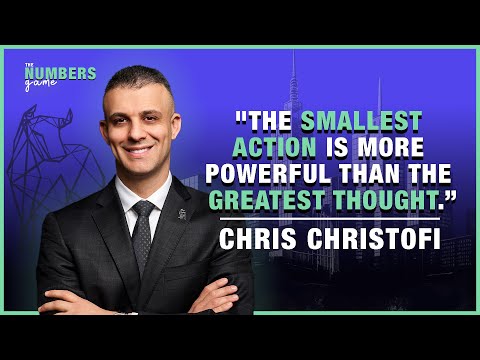 Chris Christofi on Relentless Learning, Giving Back & Staying Hungry
16 June 2025EP 236
The ATO's Crackdown
3 July 2023EP 118
 Crafting Your Business Edge
14 October 2024EP 207